DigestFlow Official Website › Blog › DigestFlow and Sleep
DigestFlow and sleep: how does 138 mg of caffeine fit into your day?
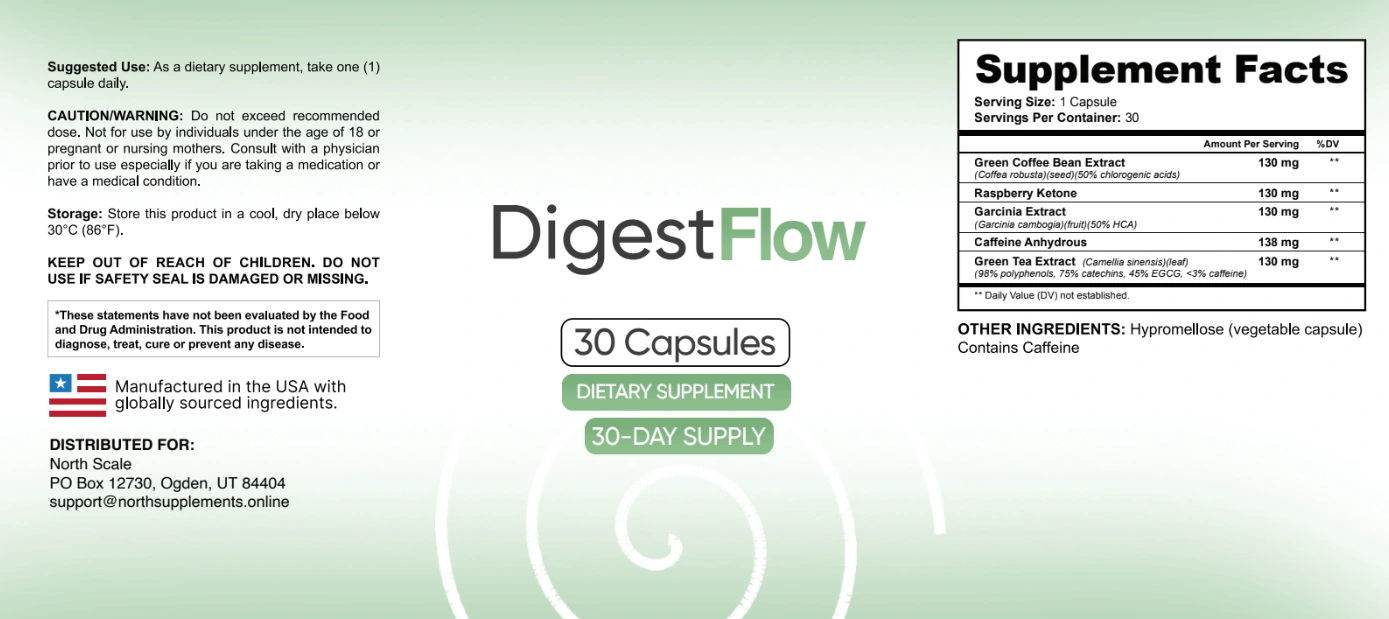
DigestFlow and sleep is the most practical safety question the capsule raises. Each capsule carries 138 mg of caffeine anhydrous, and the caffeine is the part that most often shows up in an evening. This post shows how to fit it into a day.
Quick answer: DigestFlow and sleep come together through the caffeine: each capsule holds 138 mg, about a large mug of coffee. Shorter or lighter sleep is common if the capsule is taken after midday. The fixes are simple: take it in the morning, with a little food, and add up your other caffeine so the day stays well under 400 mg.
- Each capsule has 138 mg of caffeine anhydrous and a Contains Caffeine line on the label.
- Shorter or lighter sleep is common if the capsule is taken after midday.
- The FDA cites 400 mg a day as an amount not generally associated with negative effects in healthy adults.
- Three mugs of brewed coffee plus one capsule comes to about 423 mg, which is over that figure.
- A morning dose with a little food is the usual fix.
Why do DigestFlow and sleep belong in the same sentence?
Because of one row on the panel. Caffeine anhydrous is printed at 138 mg per capsule, and the label adds a separate Contains Caffeine line. A green tea extract row adds a trace on top. The other four rows work slowly, if they work at all. The caffeine acts within the hour.
The retailer’s side effects page states the likely effects at this dose plainly. Alertness is expected, since that is the point of the molecule. A faster or more noticeable heartbeat is common in people not used to it. Jitteriness on an empty stomach affects a minority. Shorter or lighter sleep is common if the capsule is taken after midday.
How much caffeine does DigestFlow add to your day?
This sum takes thirty seconds and it decides the purchase for many people. The capsule figure is exact because the panel prints it. The drink figures are ordinary published ranges and vary a lot with brew strength and cup size.
| A day that already has | Approximate caffeine | Plus one capsule |
|---|---|---|
| Nothing | 0 mg | 138 mg |
| One cup of tea | about 47 mg | about 185 mg |
| One mug of brewed coffee | about 95 mg | about 233 mg |
| Two mugs of brewed coffee | about 190 mg | about 328 mg |
| Three mugs of brewed coffee | about 285 mg | about 423 mg |
Drink figures are rough. The 400 mg a day reference is the FDA figure for healthy adults.
The last row is over the line. If your day looks like that, the useful conversation is about the afternoon drink, not about the capsule.
When should you take DigestFlow if you care about sleep?
The label gives one instruction: take one capsule daily. It does not say when. The retailer’s how to use page makes the choice for you on sleep grounds, and we agree with it. Take it in the morning, with water, before midday, so that most of the dose is behind you by evening.
The how to use page backs this with a controlled bedtime trial in which people took caffeine zero, three and six hours before bed. Even the six-hour dose cut total sleep time by around an hour, and the participants largely did not notice. A 2023 meta-analysis found the same direction of effect across studies. Applied to this capsule, an afternoon dose is a night of shorter sleep you may not blame on it. Since sleep itself moves digestive symptoms, that can also make the thing you are trying to measure harder to read. Morning, before midday, then forget it. That is the whole rule.
What if DigestFlow and sleep do not agree?
Work down a short ladder before you stop. The retailer’s side effects page lays it out.
- Move it earlier. If sleep is light or you feel restless in the evening, take the capsule an hour or two sooner for a week. That is a cheaper test than stopping.
- Take it with food. If the complaint is nausea or a jittery half-hour, an empty stomach is the usual reason. A slice of toast changes how it arrives.
- Count everything else. 138 mg on top of three coffees is over 400 mg before lunch. A full day is the commonest reason a caffeine capsule feels wrong.
- Stop, if none of that works. The 60-day guarantee runs from the date of purchase, and the order line on +1 (877) 257-0710 handles it.
The one set of complaints that skips the ladder is the liver list: yellowing of the skin or eyes, dark urine, pale stools, persistent nausea, right-sided abdominal pain or unusual tiredness. Those are reasons to stop at once and be seen.
Check, then decide at your own pace
Once you have done the caffeine sum, the order page shows the price and the guarantee before you pay.
See today's price and guaranteeDisclosure: this website is a retailer and earns on the packs it sells. The checkout shows the amount you pay.
Does stopping DigestFlow affect sleep or headaches?
Possibly, in a mild way. The retailer lists headache on a day you skip it as possible after regular use. It describes this as a withdrawal effect and not a sign that the formula was doing something. It is ordinary caffeine behaviour.
If you plan to stop after a few weeks, you could expect a day or two of this. If it bothers you, say so to a clinician. The label’s caution also asks you not to exceed the recommended dose, so do not use extra capsules to push through a bad evening or a dull morning.
Who should be most careful with DigestFlow and sleep?
Anyone told to limit caffeine, because the capsule is the relevant fact about the product for them. The usual reasons the retailer names are blood pressure, arrhythmia, reflux and anxiety. If one of those is yours, raise the capsule with your doctor before buying. The label also excludes anyone under 18 and anyone pregnant or nursing.
Heavy coffee drinkers should do the sum above first. And anyone who already sleeps badly should think hard, since a stimulant and a poor night make an unhelpful pair. The post DigestFlow dosage: how many a day and when to take it covers the timing question further.
What is the practical plan for DigestFlow and sleep?
Keep it short. Write down your caffeine for seven days before the capsule arrives. Decide a morning time and tie it to breakfast. Add the 138 mg to your normal total and check it against the 400 mg a day reference. Note your sleep each morning in a word or a score. After two weeks, read your notes, not your memory.
If the notes show worse sleep, move the capsule earlier or cut a coffee. If they still show worse sleep, you have your answer, and the guarantee exists for exactly that case. The side effects page and the how to use page have the longer version.
Where do these facts come from?
Label figures come from the printed artwork. Prices and policy terms come from the order paperwork, read on 19 September 2026. Reference points come from sources this website already cites:
- Drake et al., caffeine effects on sleep taken 0, 3 or 6 hours before bed: https://pubmed.ncbi.nlm.nih.gov/24235903/
- Gardiner et al., the 2023 meta-analysis of caffeine and subsequent sleep: https://pubmed.ncbi.nlm.nih.gov/36870101/
- The FDA’s own caffeine guidance: https://www.fda.gov/consumers/consumer-updates/spilling-beans-how-much-caffeine-too-much
- MedlinePlus on constipation, a plain-language page on digestive symptoms: https://medlineplus.gov/constipation.html
- NCCIH on dietary and herbal supplements: https://www.nccih.nih.gov/health/dietary-and-herbal-supplements
Frequently asked questions
Does DigestFlow keep you awake?
It can. Each capsule has 138 mg of caffeine, and shorter or lighter sleep is common if it is taken after midday.
When is the best time to take DigestFlow?
In the morning, ideally with a little food. The label only says one capsule daily, so the timing is a sensible choice, not a label rule.
Can I take DigestFlow with coffee?
Yes, but count both. One capsule plus three mugs of brewed coffee is about 423 mg, which is over the 400 mg a day FDA reference.
Is there a caffeine-free DigestFlow?
Not published. The label lists one formula with caffeine anhydrous at 138 mg.
What if I get a headache when I skip a day?
That is possible after regular use and is described as ordinary caffeine withdrawal, not a sign of benefit.
Should I take two capsules for a stronger effect?
No. Two capsules would be 276 mg of caffeine in one dose, and the label says not to exceed the recommended dose.
Our view
DigestFlow and sleep come down to one number and one clock. The number is 138 mg of caffeine. The clock is the morning. If your day has room for the number and you keep the capsule early, most sleep problems never begin.
If they do, the fix is cheap: move it earlier, add food, cut a coffee. Only after that does stopping make sense. Whatever you decide, the guarantee window gives you time to find out without any rush.
Ready to look at the real terms?
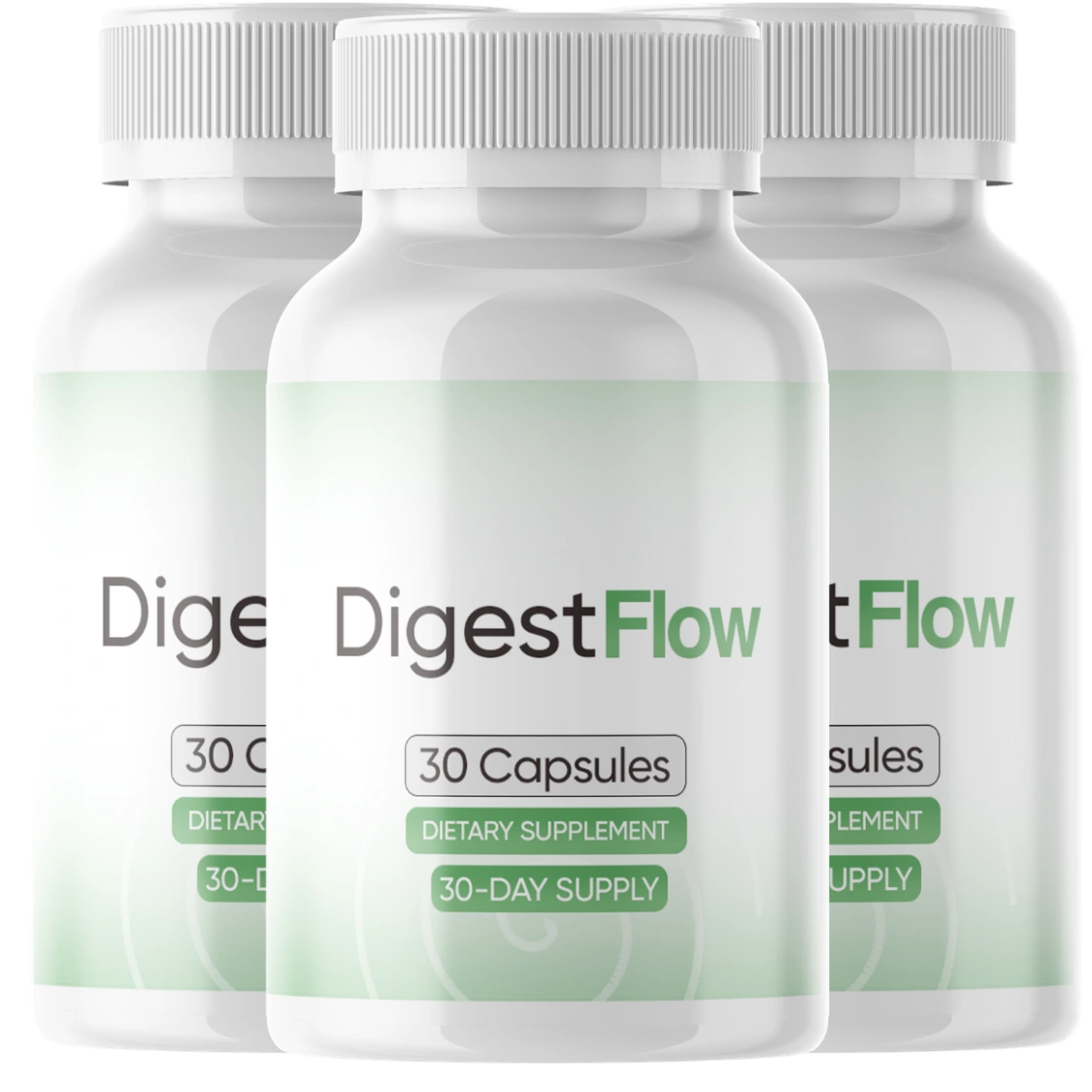
The two-bottle pack covers the 60-day window. Take your time with the sum first.
See today's price and guaranteeDisclosure: this website is a retailer and earns on the packs it sells. The checkout shows the amount you pay.
Last updated . Medically reviewed by Dr. Will Bulsiewicz, MD, Physician.