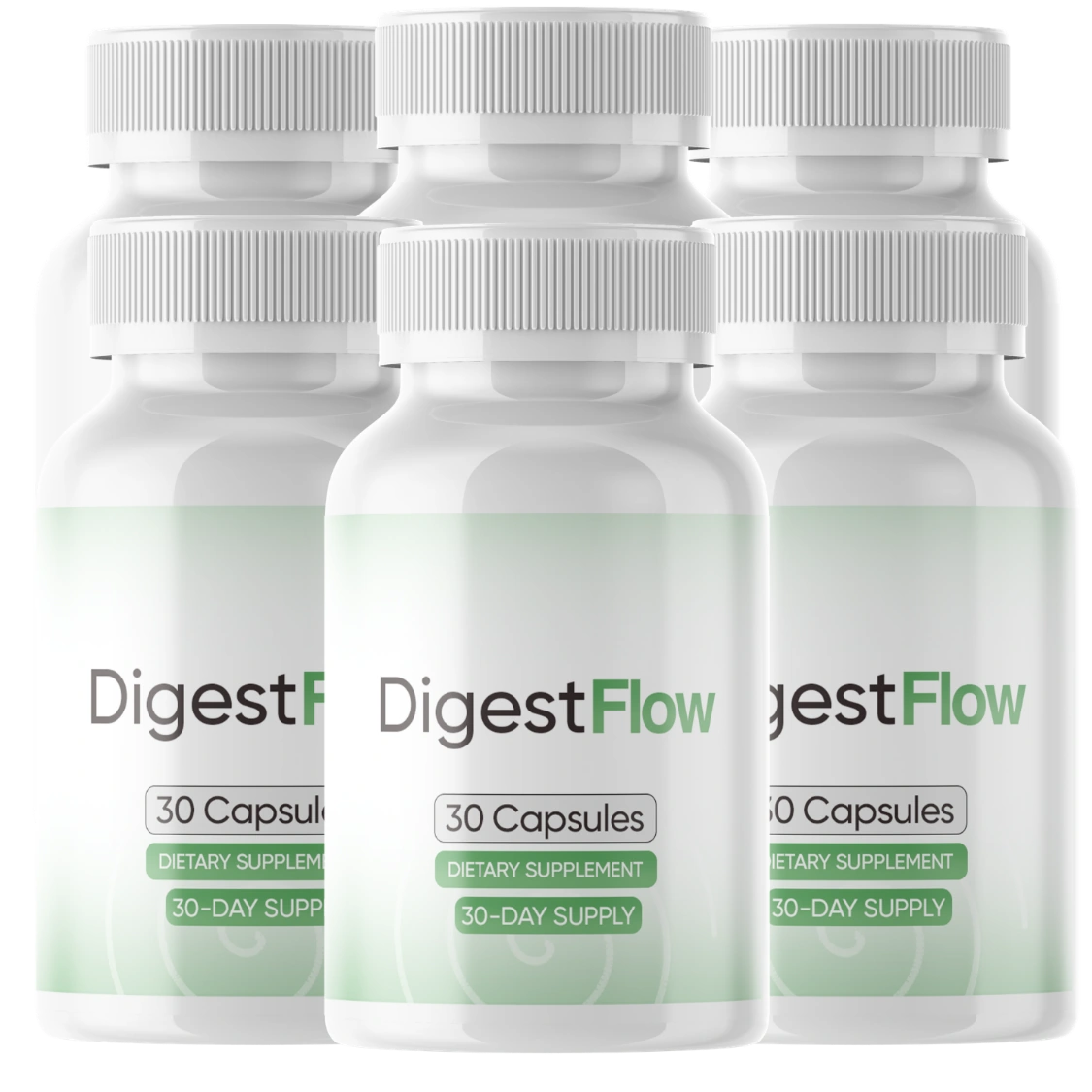
DigestFlow Official Website › DigestFlow Ingredients
DigestFlow IngredientsDigestFlow Ingredients: What Each Capsule Contains
DigestFlow has five actives in one capsule, 658 mg in total, with every dose printed.
Green coffee bean extract, raspberry ketone, garcinia extract and green tea extract come in at 130 mg each, and caffeine anhydrous at 138 mg. The shell is hypromellose.
For the full printed label, see the Supplement Facts panel.
The seller's front page lists nothing at all. Everything below is read off the Supplement Facts artwork that travels with the carton, which is the only published source for this formula.
What the DigestFlow panel prints, in order
| Row | Per capsule | % Daily Value |
|---|---|---|
| Green Coffee Bean Extract (Coffea robusta) (seed) (50% chlorogenic acids) | 130 mg | †† |
| Raspberry Ketone | 130 mg | †† |
| Garcinia Extract (Garcinia cambogia) (fruit) (50% HCA) | 130 mg | †† |
| Caffeine Anhydrous | 138 mg | †† |
| Green Tea Extract (Camellia sinensis) (leaf) (98% polyphenols, 75% catechins, 45% EGCG, <3% caffeine) | 130 mg | †† |
†† Daily Value (DV) not established. The artwork prints this marker as a double asterisk. Other ingredients: hypromellose (vegetable capsule). The panel also carries a separate Contains Caffeine line.
Serving size is one capsule and there are thirty servings in a container. Every row carries the double dagger, because none of these five has an established Daily Value, which is normal for botanical extracts and for caffeine alike.
Every DigestFlow ingredient, one at a time
Five cards, each with the printed weight, the standardisation, what the ingredient has been studied for and the dose that work used.
Green Coffee Bean Extract
Coffea robusta, seed130 mgStandardised to 50% chlorogenic acids, so a 130 mg row delivers roughly 65 mg of acids. Green coffee is unroasted coffee: roasting is what destroys most of the chlorogenic acid content, which is why the extract exists at all.
What happens to those acids is the interesting part for a gut product. The metabolism review by Clifford and colleagues describes chlorogenic acids as poorly absorbed intact, with the bulk reaching the colon and being transformed there by resident bacteria. Whatever the effect is, it happens in the lower gut rather than in the bloodstream.
The reputation of this ingredient rests largely on one trial, and that trial was retracted. The 2012 crossover study is catalogued by PubMed as a Retracted Publication. It is still quoted widely; it should not be. Separately, a 2026 quantitative analysis of green coffee supplements on sale found chlorogenic acid and caffeine contents that repeatedly failed to match the declared figures, which is a reason to prefer a label that prints a standardisation percentage, as this one does.
Raspberry Ketone
130 mgA single aromatic compound, the one that gives raspberries their smell. It is not an extract and there is no standardisation figure to read, so 130 mg is 130 mg.
The evidence base is honest and short. The 2005 rodent study that started the interest fed raspberry ketone to mice at doses far above anything a capsule delivers and reported effects on fat accumulation. A 2021 pharmacological review surveyed the field afterwards and the picture had not changed much: cell and animal work, no controlled human trial of the isolated compound.
There is also nothing in that literature about digestion in either species. This row is on the panel because it is a standard member of the ingredient set, and a reader is better served by hearing that than by a paragraph of mechanism written around a gap.
Garcinia Extract
Garcinia cambogia, fruit130 mgStandardised to 50% hydroxycitric acid, so roughly 65 mg of HCA from this row. The fruit rind is the traditional source and HCA is the compound everything is written about.
The reference trial is Heymsfield and colleagues in JAMA, which ran 1,500 mg of HCA a day for twelve weeks in a randomised, placebo-controlled design and found no difference between the arms. That is roughly twenty-three times this row's HCA content, and it did not separate from placebo.
The reason this ingredient still deserves a careful paragraph is safety rather than efficacy. Published case reports describe liver injury associated with garcinia products, including acute liver failure, failure requiring transplantation and a 2019 case report; the LiverTox monograph collects them. Most involve multi-ingredient products at higher doses than this. Anyone with existing liver disease should know the reports exist before taking any product containing it.
Caffeine Anhydrous
138 mgThe largest row on the panel, dried caffeine in powder form, and the only ingredient here with a documented effect on the organ this product is sold for.
Rao and colleagues measured colonic motor activity directly and found coffee raising it within four minutes, with the effect persisting for at least half an hour. A 2025 systematic review pulled together the adult constipation evidence, and the CaCo randomised trial tested caffeine specifically for restoring bowel function after laparoscopic colectomy. That is a genuine, narrow, checkable mechanism and it belongs at the front of any honest account of this formula.
138 mg is roughly a large mug of coffee. The FDA puts 400 mg a day as the level not generally associated with negative effects in healthy adults, and the 2017 systematic safety review is the work behind that figure. One capsule is about a third of the day's allowance before you drink anything.
Green Tea Extract
Camellia sinensis, leaf130 mgThe most heavily standardised row on the panel: 98% polyphenols, 75% catechins, 45% EGCG and under 3% caffeine. At 45%, this row carries about 59 mg of EGCG, and the sub-3% caffeine line means it adds only a few milligrams on top of the 138.
Green tea extract has been studied mostly for energy expenditure rather than digestion, usually in combination with caffeine. A 24-hour chamber study tested exactly that pairing, and the Cochrane review on green tea preparations concluded the effects were small and not clinically important. NCCIH summarises the position for a general reader.
The safety note is worth stating precisely rather than vaguely. The USP hepatotoxicity review examined the case literature and located the concern in concentrated extracts taken in large daily amounts, above roughly 800 mg of EGCG, often on an empty stomach. LiverTox takes the same line. 59 mg is a long way below that, and the reason to know the figure is that green tea extract turns up in several products at once.
What a standardisation figure changes on the DigestFlow label
Three of the five rows carry a percentage, and the percentage is the number that makes a comparison possible. A 130 mg row standardised to 50% delivers half that weight as the compound the research is about.
| Row | Printed weight | Standardised to | Active compound |
|---|---|---|---|
| Green coffee bean | 130 mg | 50% chlorogenic acids | about 65 mg |
| Garcinia | 130 mg | 50% HCA | about 65 mg |
| Green tea | 130 mg | 45% EGCG | about 59 mg |
| Raspberry ketone | 130 mg | Single compound | 130 mg |
| Caffeine anhydrous | 138 mg | Single compound | 138 mg |
Arithmetic from the panel's own percentages, rounded to the nearest milligram.
A label that prints only the ingredient weight, with no percentage, cannot be compared to a trial at all. This one can, and that is the reason this page is possible to write honestly.
What is not on the DigestFlow panel
Four things a buyer shopping this category might reasonably expect, and none of them is here.
- No probiotic strain. No CFU count, no genus, no species. NCCIH's page on probiotics is a fair primer if that is what you came for.
- No digestive enzyme. No protease, lipase or amylase anywhere on the artwork.
- No fibre. Nothing bulk-forming, nothing soluble, nothing prebiotic.
- No bitter or carminative herb. No ginger, no peppermint, no fennel, no gentian.
What the panel carries instead is 138 mg of caffeine, which does have a measured effect on colonic activity. So the formula is not without a mechanism. It has one rather than several, and it is the one nobody markets.
DigestFlow ingredient questions
How many ingredients are in DigestFlow?
Five named actives, plus one other ingredient. The panel prints green coffee bean extract, raspberry ketone, garcinia extract, caffeine anhydrous and green tea extract, with a milligram against each, and hypromellose as the capsule shell.
Is there a proprietary blend in DigestFlow?
No. Every row carries its own weight. That is the single most useful thing about this label and it is worth saying plainly, because a blend would make the rest of this page impossible to write.
Which DigestFlow ingredient is the largest?
Caffeine anhydrous at 138 mg. The other four are 130 mg each. Caffeine is also the only row on the panel with a directly measured effect on the intestine.
Does DigestFlow contain a probiotic?
No bacterial strain appears anywhere on this panel, and neither does a digestive enzyme or a fibre. If a live culture is what you are shopping for, this is not that product.
Who publishes this DigestFlow website?
Every source linked above, and the desk that wrote the page.
- Clifford MN, Kerimi A, Williamson G. Bioavailability and metabolism of chlorogenic acids (acyl-quinic acids) in humans. Compr Rev Food Sci Food Saf. 2020;19(4):1299-1352. PMID 33337099. https://pubmed.ncbi.nlm.nih.gov/33337099/
- Vinson JA, Burnham BR, Nagendran MV. Randomized, double-blind, placebo-controlled, linear dose, crossover study to evaluate the efficacy and safety of a green coffee bean extract in overweight subjects. Diabetes Metab Syndr Obes. 2012;5:21-7. PMID 22291473. RETRACTED. https://pubmed.ncbi.nlm.nih.gov/22291473/
- Otaif KD, Adawi HA, Alfaifi FM, et al. Chlorogenic acids and caffeine in commercial green coffee bean extract supplements: quantitative assessment and evidence of mislabelling. Food Addit Contam Part A Chem Anal Control Expo Risk Assess. 2026;43(6):806-818. PMID 42154619. https://pubmed.ncbi.nlm.nih.gov/42154619/
- Morimoto C, Satoh Y, Hara M, et al. Anti-obese action of raspberry ketone. Life Sci. 2005;77(2):194-204. PMID 15862604. https://pubmed.ncbi.nlm.nih.gov/15862604/
- Rao S, Kurakula M, Mamidipalli N, et al. Pharmacological Exploration of Phenolic Compound: Raspberry Ketone-Update 2020. Plants (Basel). 2021;10(7):1323. PMID 34209554. https://pubmed.ncbi.nlm.nih.gov/34209554/
- Heymsfield SB, Allison DB, Vasselli JR, et al. Garcinia cambogia (hydroxycitric acid) as a potential antiobesity agent: a randomized controlled trial. JAMA. 1998;280(18):1596-600. PMID 9820262. https://pubmed.ncbi.nlm.nih.gov/9820262/
- Corey R, Werner KT, Singer A, et al. Acute liver failure associated with Garcinia cambogia use. Ann Hepatol. 2016;15(1):123-6. PMID 26626648. https://pubmed.ncbi.nlm.nih.gov/26626648/
- Lunsford KE, Bodzin AS, Reino DC, et al. Dangerous dietary supplements: Garcinia cambogia-associated hepatic failure requiring transplantation. World J Gastroenterol. 2016;22(45):10071-10076. PMID 28018115. https://pubmed.ncbi.nlm.nih.gov/28018115/
- Yousaf MN, Chaudhary FS, Hodanazari SM, Sittambalam CD. Hepatotoxicity associated with Garcinia cambogia: A case report. World J Hepatol. 2019;11(11):735-742. PMID 31772720. https://pubmed.ncbi.nlm.nih.gov/31772720/
- LiverTox: Clinical and Research Information on Drug-Induced Liver Injury. Garcinia Cambogia. Bethesda (MD): National Institute of Diabetes and Digestive and Kidney Diseases. https://www.ncbi.nlm.nih.gov/books/NBK548087/
- Rao SS, Welcher K, Zimmerman B, Read N. Is coffee a colonic stimulant? Eur J Gastroenterol Hepatol. 1998;10(2):113-8. PMID 9581985. https://pubmed.ncbi.nlm.nih.gov/9581985/
- Latthe A, Tan A, Latthe P. The Effectiveness of Caffeine in Reducing Constipation in Adults: A Systematic Review. Int Urogynecol J. 2025;36(2):253-264. PMID 39666017. https://pubmed.ncbi.nlm.nih.gov/39666017/
- Abbassi F, Muller SA, Steffen T, et al. Caffeine for intestinal transit after laparoscopic colectomy: randomized clinical trial (CaCo trial). Br J Surg. 2022;109(12):1216-1223. PMID 35909263. https://pubmed.ncbi.nlm.nih.gov/35909263/
- Wikoff D, Welsh BT, Henderson R, et al. Systematic review of the potential adverse effects of caffeine consumption in healthy adults, pregnant women, adolescents, and children. Food Chem Toxicol. 2017;109(Pt 1):585-648. PMID 28438661. https://pubmed.ncbi.nlm.nih.gov/28438661/
- U.S. Food and Drug Administration. Spilling the Beans: How Much Caffeine is Too Much? FDA Consumer Update. https://www.fda.gov/consumers/consumer-updates/spilling-beans-how-much-caffeine-too-much
- Berube-Parent S, Pelletier C, Dore J, Tremblay A. Effects of encapsulated green tea and Guarana extracts containing a mixture of epigallocatechin-3-gallate and caffeine on 24 h energy expenditure and fat oxidation in men. Br J Nutr. 2005;94(3):432-6. PMID 16176615. https://pubmed.ncbi.nlm.nih.gov/16176615/
- Jurgens TM, Whelan AM, Killian L, et al. Green tea for weight loss and weight maintenance in overweight or obese adults. Cochrane Database Syst Rev. 2012;12(12):CD008650. PMID 23235664. https://pubmed.ncbi.nlm.nih.gov/23235664/
- Oketch-Rabah HA, Roe AL, Rider CV, et al. United States Pharmacopeia (USP) comprehensive review of the hepatotoxicity of green tea extracts. Toxicol Rep. 2020;7:386-402. PMID 32140423. https://pubmed.ncbi.nlm.nih.gov/32140423/
- LiverTox: Clinical and Research Information on Drug-Induced Liver Injury. Green Tea. Bethesda (MD): National Institute of Diabetes and Digestive and Kidney Diseases. https://www.ncbi.nlm.nih.gov/books/NBK547925/
- National Center for Complementary and Integrative Health. Green Tea: Usefulness and Safety. https://www.nccih.nih.gov/health/green-tea
- National Center for Complementary and Integrative Health. Probiotics: What You Need To Know. https://www.nccih.nih.gov/health/probiotics-what-you-need-to-know
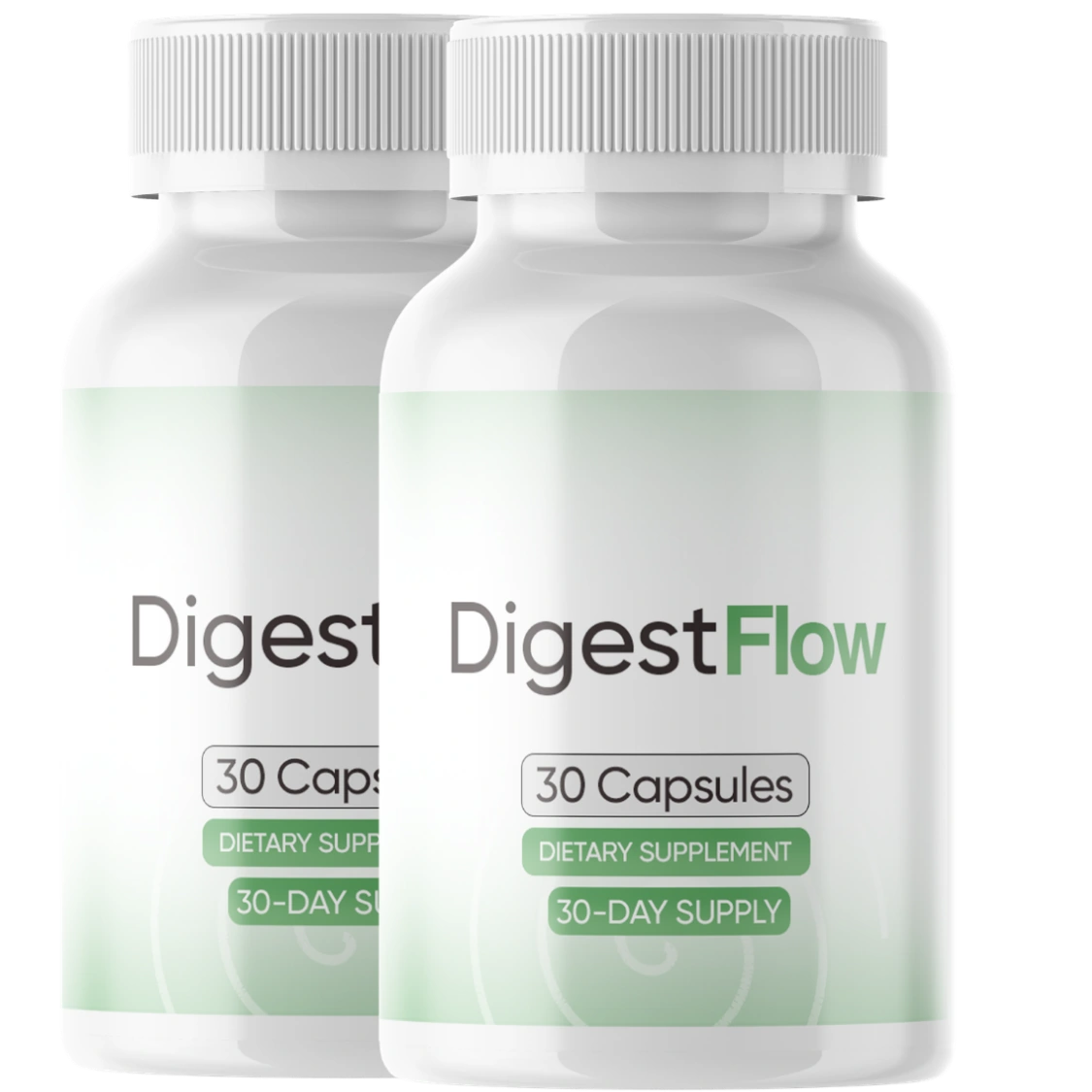
Order DigestFlow with the panel in front of you
You have read every weight on the label before spending anything, which is the order those two things should happen in.
Two bottles $158 · six bottles $294 · 60 days from purchase
Order DigestFlow On The Official WebsiteOne capsule a day · 30 per bottle · lot DIG-26/GO-2148