DigestFlow Official Website › Blog › DigestFlow Dosage
DigestFlow Dosage: 5 Steps To Get How Many A Day And When To Take It Right
“How many DigestFlow a day” and “when to take DigestFlow” have short answers. The steps below give those answers first, and then the sums behind them so you can trust them.
Quick answer: Take one DigestFlow capsule a day, in the morning, before midday. The label asks for one capsule daily and no more than the recommended dose. Two capsules would be 276 mg of caffeine at once. Whether to take it with food is not stated on the label, so a little food is a sensible default.
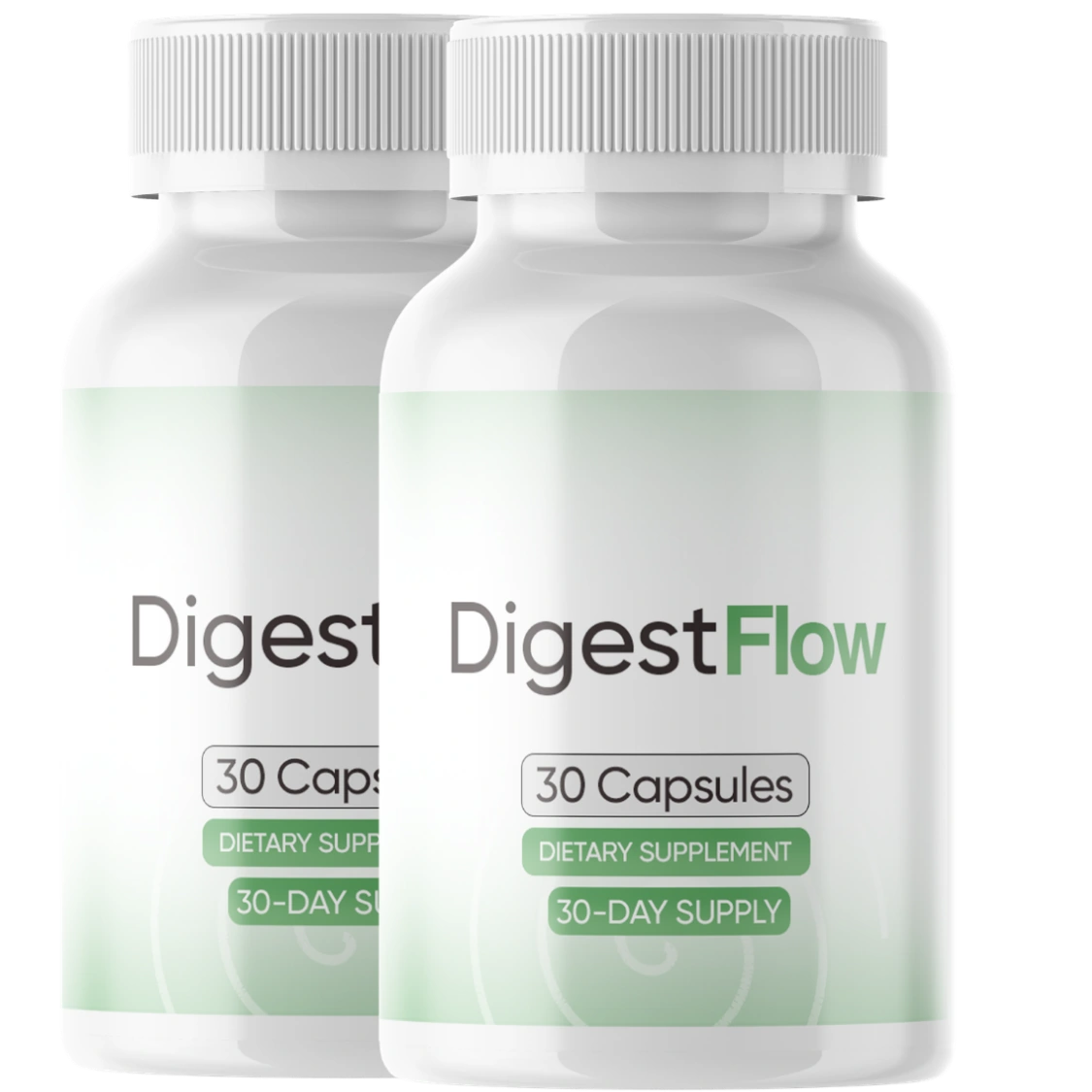
- The label dose is one capsule daily. The label also says not to exceed the recommended dose.
- One bottle is 30 capsules, so one bottle is 30 days; two bottles cover 60 days.
- Two capsules at once would be 276 mg of caffeine.
- The FDA figure for healthy adults not generally linked with negative effects is 400 mg of caffeine a day. One capsule spends 138 of those 400 milligrams.
- Taking it in the morning is the sensible timing, because caffeine taken six hours before bed has been shown to shorten sleep.
- Food with the capsule: the label is silent. Missed days: the label is silent.
Step 1: How many DigestFlow capsules should you take a day?
One. The instruction on the bottle is short: “As a dietary supplement, take one (1) capsule daily.” It is followed by a second sentence that matters just as much, “Do not exceed recommended dose.” That is the whole dosing rule.
The serving size on the panel is one capsule and the bottle holds 30 servings. So one bottle lasts a month at the label dose. A pack of two bottles lasts 60 days, three bottles 90 days and six bottles 180 days.
| Pack | Capsules | Days at one a day |
|---|---|---|
| 2 bottles | 60 | 60 |
| 3 bottles | 90 | 90 |
| 6 bottles | 180 | 180 |
No single bottle is sold.
Step 2: Why not take two capsules to get more?
Because the dose is already a real one. Each capsule holds 138 mg of caffeine anhydrous, and two would put 276 mg into a single hit. The label tells you not to go past one, and nothing published says that more would do more.
There is also a plain reason on the other 520 mg of the capsule. Four of the five rows come from weight-management writing, and for the digestive aim of this product the only row with a measured effect on the intestine is the caffeine. Doubling the capsule mostly doubles the thing you can already feel.
If you feel nothing at one capsule, the answer is not a bigger dose. It is to give a full bottle, keep notes, and use the guarantee if the answer is no.
Step 3: How much caffeine is already in your day?
Add up your drinks before the first capsule. The FDA's figure for healthy adults is 400 mg of caffeine a day, a level not generally linked with negative effects. One capsule uses 138 mg of that allowance.
| Your day before the capsule | Approx. caffeine | With one capsule |
|---|---|---|
| No caffeine | 0 mg | 138 mg |
| A cup of tea | roughly 47 mg | roughly 185 mg |
| A mug of filter coffee | roughly 95 mg | roughly 233 mg |
| Two mugs of filter coffee | roughly 190 mg | roughly 328 mg |
| Three mugs of filter coffee | roughly 285 mg | roughly 423 mg |
Treat the drink numbers as rough, because brew strength and cup size change them. The capsule number is exact.
The last row is over the 400 mg figure. If that is your day, the question is not how many capsules. It is whether to drop a drink, or whether this product fits you at all.
One capsule a day, for 60 days
Two bottles cover the whole 60-day guarantee window at the label dose, so you can run a proper first month.
See today's price and guaranteeDisclosure: this website is a retailer and earns on the packs it sells. The checkout shows the amount you pay.
Step 4: When is the best time of day to take DigestFlow?
Morning, and before midday. In one trial, volunteers took caffeine at bedtime, three hours before and six hours before. Even the six-hour group lost about an hour of total sleep, and most did not notice. A later meta-analysis of the field found the same direction of effect.
So an afternoon capsule can cost you sleep without feeling like the cause. And poor sleep moves digestive symptoms in both directions, which makes any record you keep harder to read.
Pick one hour and keep it. A fixed hour is the simplest way to tell later whether anything changed. A moving schedule makes the month unreadable.
Step 5: Should you take it with food, and what if you miss a day?
The label does not say. With this much caffeine in one capsule, a little food is the sensible default. A fasted dose feels sharper to people who are not used to caffeine, and some feel jittery. If food and timing are both new, change one at a time.
After a missed day, go back to your usual hour with one capsule. Never double up. The label does not give a rule for missed doses, so this is the cautious reading of the one-capsule limit. A single missed day matters less than a schedule that keeps moving.
Store the closed bottle somewhere cool and dry, under 30 degrees Celsius (86 degrees Fahrenheit), with the sachet left in. Do not use a bottle whose safety seal is damaged or missing.
Who should skip it or ask a doctor first?
The label rules out individuals under 18 and pregnant or nursing mothers. It also asks you to see a physician first if you take a medication or have a medical condition. Anyone told to limit caffeine for blood pressure, a heart rhythm problem, reflux or anxiety should treat the 138 mg as the main fact about this product.
The dose is one capsule for adults who have cleared it with a doctor where needed. Nothing here is a prescription, and the product is not FDA approved, as no supplement is.
What does a simple first-month plan look like?
- Do the caffeine sum for your own day.
- Write down two or three things you want to watch.
- Take one capsule at the same morning hour for 30 days.
- Change nothing else on purpose for the first two weeks.
- Read your notes at day 30 and set a reminder for day 50.
Day 50 matters because the supplier product sheet starts the 60 days at purchase, while the seller's own page starts them at shipping. Working from the payment date satisfies both and leaves ten days to phone the order desk and post a parcel.
Frequently asked questions
What is the right number of DigestFlow capsules per day?
One. The label asks for one capsule daily and no more than the recommended dose. One bottle holds 30 capsules, so it lasts 30 days at that dose.
Can I take two DigestFlow capsules at once?
No. The label tells you to stay within the recommended dose. Two capsules would put 276 mg of caffeine into one dose, and nothing published says that more would help.
Which hour of the day works best for DigestFlow?
In the morning, before midday. In a bedtime trial, even a dose six hours before sleep shortened measured sleep by around an hour, and most volunteers did not notice.
Should I take DigestFlow with food?
The label is silent on this. With 138 mg of caffeine in the capsule, a little food is a sensible default, because a fasted dose can feel sharper.
What happens if I forget a DigestFlow capsule?
Resume at the normal hour with a single capsule, never two. The label gives no missed-dose rule, so this follows the one-capsule limit. A moving schedule is a bigger problem than one missed day.
Is the DigestFlow dosage safe for everyone?
No. The label rules out under-18s and pregnant or nursing mothers, and sends anyone on medication or with a medical condition to a physician first. The product is not FDA approved.
Sources
- U.S. Food and Drug Administration. Spilling the Beans: How Much Caffeine is Too Much? FDA Consumer Update: https://www.fda.gov/consumers/consumer-updates/spilling-beans-how-much-caffeine-too-much
- Drake C, Roehrs T, Shambroom J, Roth T. Caffeine effects on sleep taken 0, 3, or 6 hours before going to bed. J Clin Sleep Med. 2013. PMID 24235903: https://pubmed.ncbi.nlm.nih.gov/24235903/
- Gardiner C, Weakley J, Burke LM, et al. The effect of caffeine on subsequent sleep: A systematic review and meta-analysis. Sleep Med Rev. 2023. PMID 36870101: https://pubmed.ncbi.nlm.nih.gov/36870101/
- Wikoff D, Welsh BT, Henderson R, et al. Systematic review of the potential adverse effects of caffeine consumption in healthy adults, pregnant women, adolescents, and children. Food Chem Toxicol. 2017. PMID 28438661: https://pubmed.ncbi.nlm.nih.gov/28438661/
- MedlinePlus, U.S. National Library of Medicine. Caffeine: https://medlineplus.gov/caffeine.html
- The DigestFlow label as reproduced on this site
Our view
There is almost no dosing to decide with this product. One capsule, one hour, one bottle before you judge. The only real decision is what time of day, and the sleep evidence points to the morning.
The part worth your time is the caffeine sum, because it decides whether this capsule fits your day at all. Do it once with a pen. If it fits, a first month with notes is a fair way to find out. Check with a doctor first if you take medication or have a medical condition. This page is general information, not medical advice.
Do the sum, then decide
If 138 mg fits inside your day, the official page shows today's price and the 60-day guarantee terms.
See today's price and guaranteeDisclosure: this website is a retailer and earns on the packs it sells. The checkout shows the amount you pay.
Last updated . Medically reviewed by Dr. Will Bulsiewicz, MD, Physician.