DigestFlow Official Website › Blog › The Green Coffee Trial That Was Retracted
The Green Coffee Trial That Was Retracted, And Why It Still Circulates
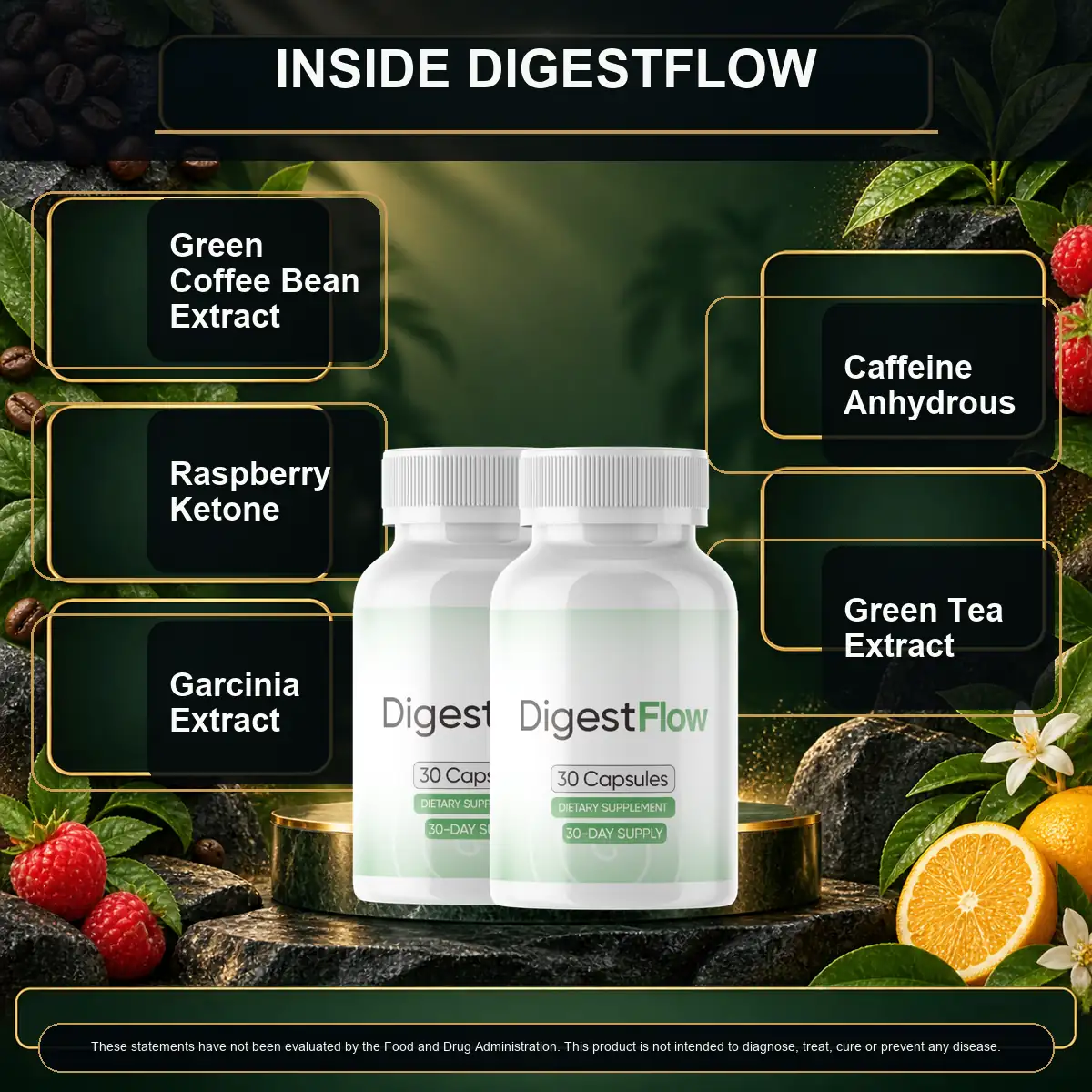
Green coffee bean extract leads the DigestFlow panel and leads the vendor's own ingredient graphic. Anyone who searches the ingredient will meet its most famous study within a page of results, and that study was withdrawn by its own authors. This is what happened and what is left standing.
- The 2012 trial that made green coffee famous was retracted by its authors in 2014.
- PubMed carries it with a Retracted Publication type and a retraction notice attached.
- It is still quoted widely, usually without any mention of the withdrawal.
- This desk cites it by name, as a retraction, and does not lean on it.
- The DigestFlow row is 130 mg standardised to 50 per cent chlorogenic acids, so about 65 mg of acids.
- Most of those acids are not absorbed intact; they reach the colon and are transformed there.
What happened to the study
The paper was a small randomised crossover study of a green coffee bean extract in overweight subjects, published in 2012 in a specialist journal. Its reported effect was large, the coverage that followed was enormous, and within a couple of years green coffee bean extract had gone from obscurity to being on every supplement shelf in the country.
By 2014 the paper had been retracted by its authors. PubMed's record for it carries the publication type Retracted Publication and a retraction notice, which is how an automated check finds it and how this desk found it.
The wider context is the advertising one. The FTC publishes guidance on what a health claim in supplement advertising requires by way of evidence, and the green coffee episode is one of the standard illustrations of a claim built on a study that could not carry it.
| Stage | What happened | What it left behind |
|---|---|---|
| The trial | A small crossover study of a green coffee bean extract was published in 2012 | A striking result and a wave of coverage |
| The publicity | The result was repeated across television, print and the whole supplement internet | Green coffee bean extract as a household name |
| The challenge | A regulator took action over the study and the claims built on it | The sponsor's role and the data handling under scrutiny |
| The retraction | The authors withdrew the paper in 2014 | PubMed carries it as a Retracted Publication with a retraction notice |
| The afterlife | It is still quoted, often without the notice | An ingredient whose fame outlived its evidence |
A summary of the public record around one paper. The PubMed entry for it is linked in the references and carries its own publication-type field.
Why it is still quoted
Retraction is a quiet process and marketing is not. A withdrawn paper does not disappear: it stays in the literature with a notice attached, and anyone who copied its abstract into a sales page in 2013 is not notified when the notice appears.
Three practical consequences follow, and all three are worth recognising on any supplement page, including this one.
- A citation is not a verification. A page can link a real PubMed record that carries a retraction notice the page never mentions.
- A result can outlive its paper by a decade. The number keeps circulating in summaries and listicles long after the source is gone.
- Checking is cheap and almost nobody does it. The publication type sits in the PubMed record, free, in a field designed to be read by machines.
Every study linked on this website was pulled through the PubMed programming interface and read out of the returned record, including its publication type and any retraction notice. That is why this paper appears here labelled as a retraction rather than quoted as evidence, and it is a check that takes seconds once it is part of the routine.
Checking a citation yourself, in two minutes
This is not specialist work and it does not require a subscription to anything. The whole check is free and public, and it is worth knowing because the green coffee episode will not be the last of its kind.
- Find the PMID. Every PubMed record has one, and it is usually printed at the end of a proper citation.
- Open the record. Any of the ordinary routes will do.
- Look at the publication type field. Retracted Publication appears there, in plain words, and so does Expression of Concern.
- Look for a linked notice. A retraction is itself a published item, and the record links to it.
- Read the authors and the year. A citation with a right title and wrong authors is a real thing that happens when two papers get conflated.
- Then decide what weight the claim carries. A withdrawn paper carries none.
Two minutes, per citation, and the result is binary. A page that cites twenty studies and has never run that check on any of them is not being dishonest; it is simply not doing the one piece of work that separates a reference list from a decoration.
The same routine catches a second problem worth knowing about. A paper can be perfectly clean while the author on its byline carries a body of retracted work elsewhere, and that only shows up if the author name is searched against the same filters rather than the paper alone. It is another two minutes and it changed which sources ended up on this website.
What is actually in this capsule
Set the history aside and read the panel. The row is Green Coffee Bean Extract, from Coffea robusta seed, 130 mg, standardised to 50 per cent chlorogenic acids.
Green coffee is simply unroasted coffee. Roasting is what destroys most of the chlorogenic acid content, which is the entire reason the extract exists as a separate product rather than being taken as a drink.
| What is printed | What it means | What is left |
|---|---|---|
| Green Coffee Bean Extract 130 mg | The weight of extract in one capsule | 130 mg |
| 50% chlorogenic acids | The guaranteed proportion of the named compounds | About 65 mg of chlorogenic acids |
| Absorbed intact in the small intestine | A minority fraction, on the review below | Rather less reaching the bloodstream unchanged |
| Reaching the colon | The majority, where gut bacteria transform it | Smaller phenolic acids, in the organ this product is sold for |
Arithmetic from the panel's own percentage, then the general picture from the metabolism literature. Not a measurement made on this capsule.
Sixty-five milligrams of chlorogenic acids is the honest figure to carry away, and it is less than half the weight printed on the row. That arithmetic is available only because the label prints a standardisation percentage, which many labels do not.
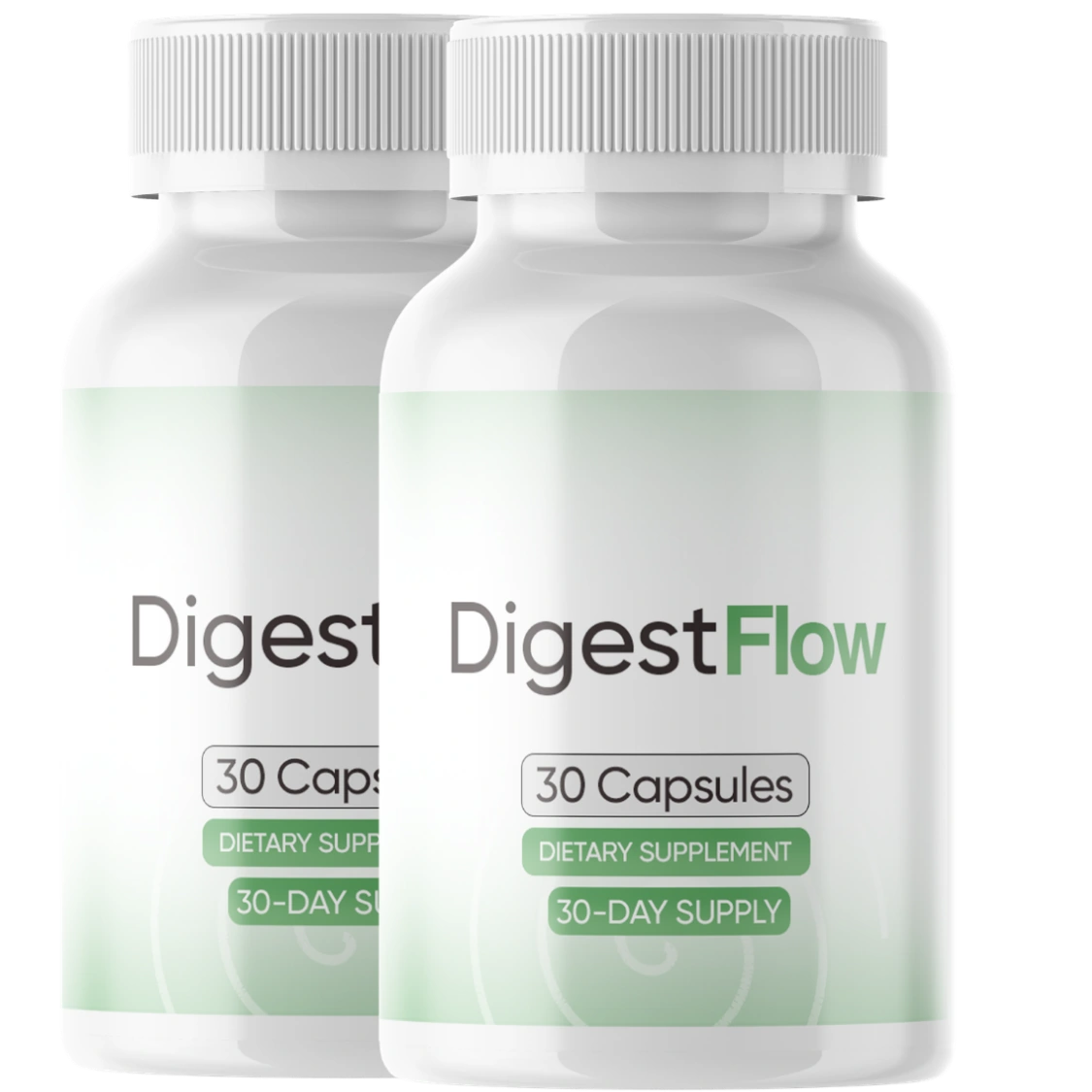
DigestFlow prints the standardisation, so the arithmetic is possible
Fifty per cent chlorogenic acids on a 130 mg row. Most of the distance between a label and a study lives in that one calculation.
Two bottles $158 · six bottles $294 · 60 days from purchase
Order DigestFlow On The Official WebsiteOne capsule a day · 30 per bottle · lot DIG-26/GO-2148
Where chlorogenic acids end up
The metabolism review by Clifford and colleagues is the useful document here, and it is about where these compounds go rather than about what they achieve. The picture it describes is that only a modest fraction of ingested chlorogenic acids is absorbed intact in the small intestine. The majority travels on to the colon, where resident bacteria cleave them into smaller phenolic acids, some of which are then absorbed.
For most product categories that is a limitation, and it is usually described as poor bioavailability. For a product sold for the gut it is at least the right neighbourhood, which is a modest and genuine point in this ingredient's favour on this particular label.
The honest qualification is immediate. Arriving in the colon is not the same as doing something there, and no trial has tested this extract at this weight for a digestive outcome. What can be stated is the destination and the quantity. What cannot be stated is the result.
What is on the shelf may not match the label
There is one more thing worth knowing about this ingredient specifically, and it is about supply rather than about science. A 2026 quantitative analysis measured chlorogenic acid and caffeine content in commercial green coffee bean extract supplements and compared the results against what the labels declared. The paper reports evidence of mislabelling.
That finding is about the category rather than about any one product, and this desk has no assay of its own to offer against it. What it changes is which question is worth asking.
- Prefer a label that prints a standardisation percentage, because a label that prints no percentage cannot be checked even in principle.
- Ask the seller for a certificate of analysis naming the laboratory, the lot and the date.
- Treat a lot number on its own as an identifier rather than as evidence. It says which run a bottle came from and measures nothing.
- Be more sceptical of an ingredient the whole market is selling than of one nobody has heard of. Volume is what creates the incentive to cut.
The lot reference for the run this desk ships is on the batch page, along with a plain account of what it does and does not establish, and a list of what a complete certificate would have to contain.
What is left standing
Strip out the retracted trial and the ingredient does not vanish. It becomes a small, properly described, modestly dosed polyphenol extract whose compounds demonstrably reach the large bowel.
That is a much smaller claim than the one that made it famous, and it is one this label never actually makes. DigestFlow is sold for digestive wellness rather than for weight change, and the NIH fact sheet on weight-loss supplements is the document to read for what the weight literature on this ingredient amounts to.
The reason this post exists is not that green coffee is discredited. It is that a reader who looks this ingredient up deserves to meet the retraction here first, from the desk selling it, rather than in a search result two minutes later.
The full panel is on supplement facts, each row is taken apart on ingredients, and the pack prices are on pricing.
References
- Vinson JA, Burnham BR, Nagendran MV. Randomized, double-blind, placebo-controlled, linear dose, crossover study to evaluate the efficacy and safety of a green coffee bean extract in overweight subjects. Diabetes Metab Syndr Obes. 2012;5:21-7. PMID 22291473. RETRACTED. https://pubmed.ncbi.nlm.nih.gov/22291473/
- Otaif KD, Adawi HA, Alfaifi FM, et al. Chlorogenic acids and caffeine in commercial green coffee bean extract supplements: quantitative assessment and evidence of mislabelling. Food Addit Contam Part A Chem Anal Control Expo Risk Assess. 2026;43(6):806-818. PMID 42154619. https://pubmed.ncbi.nlm.nih.gov/42154619/
- Clifford MN, Kerimi A, Williamson G. Bioavailability and metabolism of chlorogenic acids (acyl-quinic acids) in humans. Compr Rev Food Sci Food Saf. 2020;19(4):1299-1352. PMID 33337099. https://pubmed.ncbi.nlm.nih.gov/33337099/
- National Institutes of Health, Office of Dietary Supplements. Dietary Supplements for Weight Loss: Health Professional Fact Sheet. https://ods.od.nih.gov/factsheets/WeightLoss-HealthProfessional/
- U.S. Federal Trade Commission. Health Claims: advertising and marketing guidance for the supplement industry. https://www.ftc.gov/news-events/topics/truth-advertising/health-claims