DigestFlow Official Website › Blog › Raspberry Ketone And The Mouse Study
Raspberry Ketone: What The Mouse Study Actually Showed
It is the shortest evidence file on the DigestFlow panel and the easiest to describe honestly. One well-known rodent study, a body of cell work, no controlled human trial of the isolated compound, and nothing at all about digestion.
- The DigestFlow row is 130 mg of raspberry ketone, a single compound rather than an extract.
- No standardisation percentage applies, so 130 mg is 130 mg.
- The ingredient's reputation rests on a 2005 rodent study.
- A 2021 review surveyed the field and the human gap had not closed.
- There is no controlled human trial of the isolated compound.
- There is nothing in the literature about raspberry ketone and digestion, in any species.
What raspberry ketone is
It is a single aromatic compound, 4-(4-hydroxyphenyl)butan-2-one, and it is the molecule largely responsible for the smell of a raspberry. It has been used as a flavouring for decades, which is why its basic safety profile at food levels is unremarkable.
Almost all of the raspberry ketone in supplements is synthesised rather than extracted, for the obvious arithmetic reason: the natural concentration in fruit is tiny, and extracting a 130 mg dose from raspberries would require a quantity of fruit nobody is going to buy.
Because it is a single compound rather than a botanical extract, there is no standardisation figure to read and no percentage to multiply. The row says 130 mg and that is the amount. In a category where most of the honest arithmetic is about percentages, that is a small piece of clarity.
The study that started it
Morimoto and colleagues published the well-known work in Life Sciences in 2005. It was animal research: raspberry ketone was given to mice and effects on fat accumulation and related markers were reported.
That paper is the origin of essentially everything said about this ingredient since. It is real research, published in a real journal, and it has not been retracted or challenged. What it is not is a human trial, and nothing about its design lets it become one retrospectively.
| The rodent work | One DigestFlow capsule | |
|---|---|---|
| Species | Mice | Adult humans |
| How it was given | Mixed into the diet, as a percentage of food | A fixed 130 mg in a capsule |
| Relative exposure | A large fraction of daily food intake | A small fraction of a gram |
| Outcome measured | Fat accumulation and related markers in the animal | Nothing has been measured on this capsule |
| Digestive outcomes | Not studied | Not claimed |
A comparison of designs rather than a dose conversion. Converting animal dietary percentages into human milligrams is a contested exercise and this table deliberately does not attempt it.
The row of that table doing the most work is the third one. In the rodent design the compound was supplied as a proportion of the animals' food, which produces an exposure relative to body weight far beyond what a single 130 mg capsule delivers to an adult human.
This post deliberately does not print a conversion factor. Scaling animal dietary percentages into human milligrams is a contested exercise with several competing methods, and a single confident number here would be exactly the sort of invented precision this desk is trying to avoid. The honest statement is directional: the animal exposure was much larger, relative to the animal, than this capsule is relative to a person.
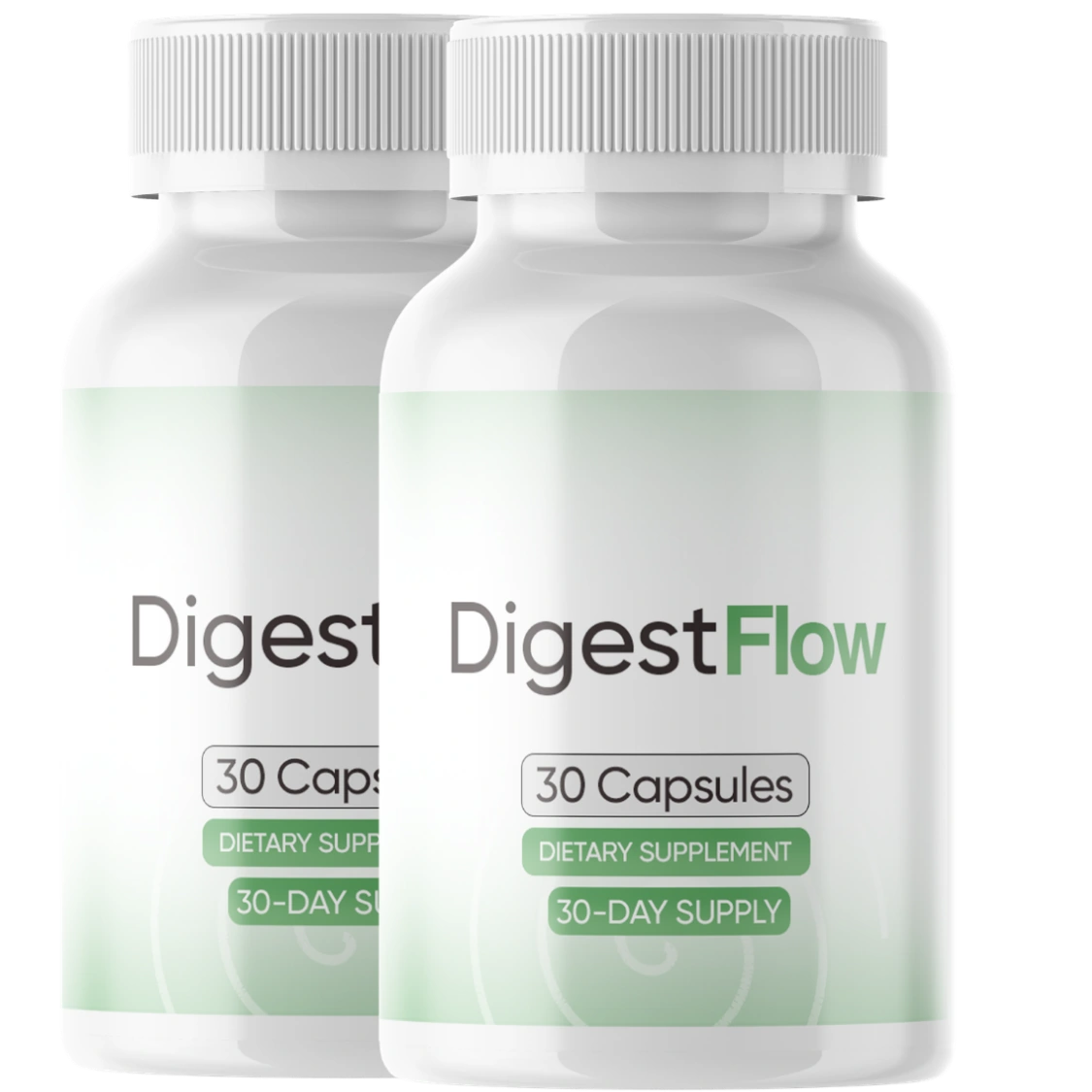
DigestFlow names the ingredient and the weight, which is where checking starts
130 mg of a single compound, printed on the panel. A proprietary blend would have made this post impossible to write.
Two bottles $158 · six bottles $294 · 60 days from purchase
Order DigestFlow On The Official WebsiteOne capsule a day · 30 per bottle · lot DIG-26/GO-2148
Why the scale matters
Because the distance between a promising animal result and a useful human product is where most supplement ingredients quietly fail, and it is where this one currently sits.
An animal study answers whether a compound can do something in a system. A human trial answers whether it does something in people, at a dose people will actually take, over a period that matters. The second question is more expensive, slower and much more likely to disappoint, which is why so many ingredients reach shelves having answered only the first.
That is not a scandal and it is not unique to this compound. It is the ordinary shape of the supplement ingredient pipeline, and a reader who knows the shape can place any ingredient on it in about a minute.
What has happened since
A 2021 pharmacological review surveyed what had accumulated around the compound in the fifteen years after the mouse work. The picture it describes is broader than 2005 and has the same hole in the middle: cell work, animal work, mechanistic proposals, and no controlled human trial of the isolated compound.
The NIH Office of Dietary Supplements fact sheet on weight-loss supplements reaches the same place from the other direction, as a plain summary for a reader who wants the category view rather than a single paper.
| Kind of evidence | Does it exist for raspberry ketone? | What that means |
|---|---|---|
| Cell and tissue studies | Yes | Plausible starting point, and nothing more |
| Rodent studies | Yes, including the well-known 2005 work | The origin of the ingredient's reputation |
| Human randomised trials of the isolated compound | No | The gap that matters most |
| Human trials of combination products containing it | A small number | Cannot attribute anything to this ingredient specifically |
| Any human digestive outcome | No | Nothing to describe in either direction |
A map of what has and has not been done, which is more useful than a verdict and is the honest state of this ingredient's file.
Two rows of that table are worth reading together. Human trials of combination products containing raspberry ketone do exist in small numbers, and they cannot tell you anything about this ingredient specifically, because a result from a capsule containing six things belongs to the capsule rather than to any one of its contents.
The last row is the one that decides what this post can honestly say. There is no literature on raspberry ketone and digestion, in any species, at any dose. That is not a negative finding. It is an absence of findings, which is a different thing and a more honest one to report.
How a flavouring became a supplement
The path this compound took is worth tracing, because it is the same path several ingredients on several shelves have taken and recognising it is a transferable skill.
It begins with a real finding in animals, published in a real journal. It passes through a period of broadcast attention, in which a striking result is described to a very large audience without the species being emphasised. It arrives at a shelf, where the ingredient is now familiar enough that a formulator can include it without having to explain it. And it settles there, because familiarity is commercially durable in a way that evidence is not.
At no point in that sequence does anybody have to be dishonest. The study is real. The coverage was accurate about what the study found. The formulator is using an inexpensive, well-characterised, food-grade compound. What has happened is simply that a finding about mice has ended up on a bottle for people, and nothing in the chain had a step where somebody was obliged to say so.
- Recognising the pattern takes one question. What species was the origin study in?
- A second question narrows it further. How was the compound given, and at what exposure relative to body weight?
- A third settles it. Has anybody run a human trial of the isolated compound since, and how long have they had?
- Fifteen years is a long time. When an ingredient is commercially successful and still has no human trial, the absence is itself a finding.
Why it is on a digestive panel
Because it belongs to a standard ingredient set. Green coffee bean, raspberry ketone, garcinia and green tea appear together on a great many labels, and once a set has cohered commercially it tends to travel as a unit into adjacent categories.
There is no need to be cynical about that to describe it accurately. A formulator assembling a capsule from familiar, available, inexpensive, well-characterised ingredients is doing something ordinary. The question a buyer should ask is simply whether the set matches the purpose on the front of the box, and on this label the answer for four of the five rows is that it does not obviously do so.
The one row that does connect to the intestine is the caffeine, and the NCCIH page on dietary and herbal supplements is a reasonable general companion for anyone weighing a panel like this one.
How to read an ingredient with a short file
- Find the origin study. Almost every famous ingredient has one, and reading its abstract takes two minutes.
- Check the species. This single question resolves a surprising proportion of supplement marketing.
- Check how it was given. Injected, fed as a dietary percentage, or swallowed as a capsule are three very different things.
- Look for a human trial of the isolated compound. If there is not one after fifteen years, that is itself informative.
- Check whether any study looked at the outcome on the box. Here, none did.
- Then decide what weight to give the row. On this panel, a small one.
Applied to raspberry ketone, those six steps take about ten minutes and produce a clear answer: an interesting compound with a real animal literature, a real human gap, and no relationship to digestion that anybody has demonstrated.
Printing that is more useful than inventing a mechanism. A reader who knows which rows on a panel are doing the work can judge the rest of the label properly, which is the whole point of the ingredients page and of the panel itself.
References
- Morimoto C, Satoh Y, Hara M, et al. Anti-obese action of raspberry ketone. Life Sci. 2005;77(2):194-204. PMID 15862604. https://pubmed.ncbi.nlm.nih.gov/15862604/
- Rao S, Kurakula M, Mamidipalli N, et al. Pharmacological Exploration of Phenolic Compound: Raspberry Ketone-Update 2020. Plants (Basel). 2021;10(7):1323. PMID 34209554. https://pubmed.ncbi.nlm.nih.gov/34209554/
- National Institutes of Health, Office of Dietary Supplements. Dietary Supplements for Weight Loss: Health Professional Fact Sheet. https://ods.od.nih.gov/factsheets/WeightLoss-HealthProfessional/
- National Center for Complementary and Integrative Health. Dietary and Herbal Supplements. https://www.nccih.nih.gov/health/dietary-and-herbal-supplements