DigestFlow Official Website › Blog › Garcinia, HCA And The Liver
Garcinia, HCA And The Liver: Reading The Case Reports Honestly
Garcinia is the row on the DigestFlow panel with the largest published safety literature and the weakest efficacy result. Both of those deserve stating precisely rather than dramatically, and this post does the stating.
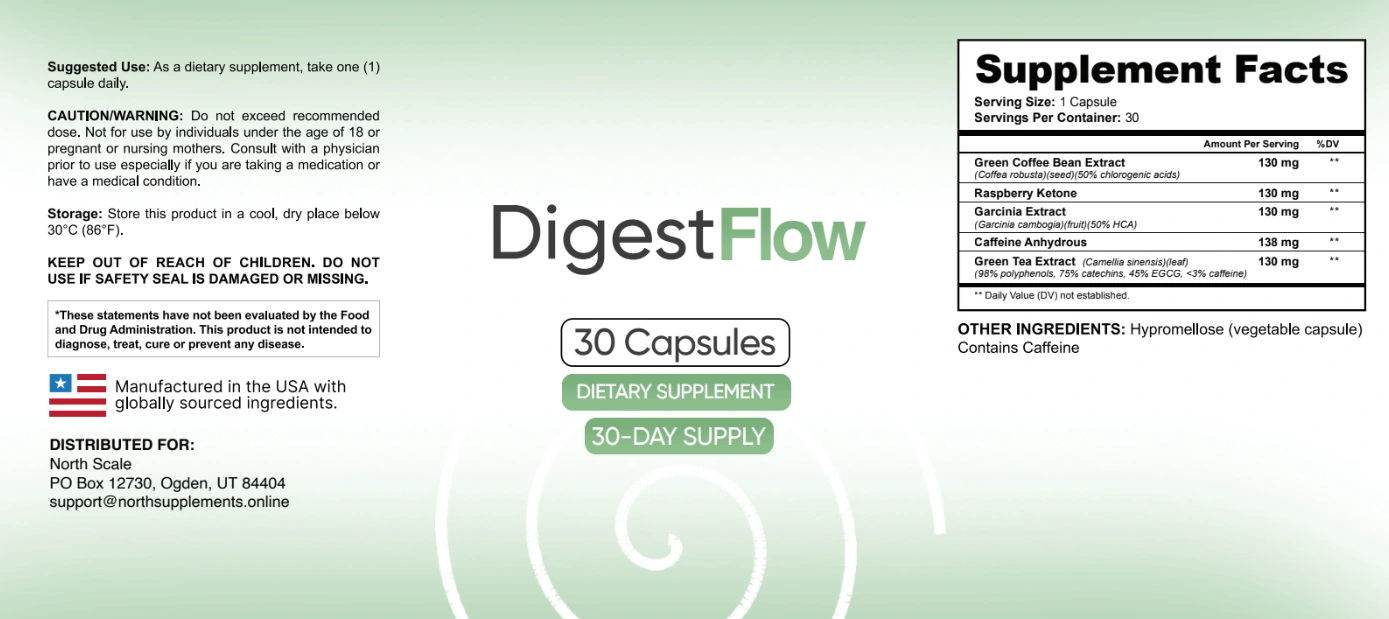
- The DigestFlow row is 130 mg of garcinia extract at 50 per cent HCA, so about 65 mg of hydroxycitric acid.
- The reference trial ran 1,500 mg of HCA a day for twelve weeks and matched placebo.
- That is roughly twenty-three times this row's daily HCA, with no separation from placebo.
- A published case literature describes liver injury associated with garcinia products.
- Most of those reports involve multi-ingredient products at higher doses than this.
- Anyone with existing liver disease should know the reports exist before taking any product containing it.
What the row is
Garcinia cambogia is a small fruit whose rind contains hydroxycitric acid, usually abbreviated to HCA. Every piece of research and every marketing claim about this ingredient is really about HCA, which is why the standardisation percentage matters more than the extract weight.
On this panel the row reads Garcinia Extract, from the fruit, 130 mg, standardised to 50 per cent HCA. That is about 65 mg of hydroxycitric acid in a daily capsule.
It is also worth saying what the row is not doing here. This is a digestive product, and garcinia has no proposed mechanism in digestion. It is on the panel because it belongs to a familiar ingredient set, which is the subject of the honest label analysis on the home page.
The trial everything rests on
Heymsfield and colleagues published the reference trial in JAMA in 1998. It was randomised, placebo-controlled, ran twelve weeks, and delivered 1,500 mg of HCA a day. It found no difference between the garcinia arm and the placebo arm.
That is an unusually clean result for this category. It is a properly designed trial, at a serious dose, over a serious duration, in a major journal, and it is null.
| On the DigestFlow panel | In the reference trial | |
|---|---|---|
| Ingredient | Garcinia Extract, fruit | Garcinia cambogia extract |
| Standardised to | 50% HCA | Standardised HCA preparation |
| Weight per day | 130 mg of extract | Enough to deliver 1,500 mg of HCA a day |
| HCA per day | About 65 mg | 1,500 mg |
| Duration | As long as somebody takes it | 12 weeks |
| Result | Not measured | No difference from placebo |
The trial column is the JAMA study linked below. The left column is arithmetic from the panel's own percentage.
The comparison in that table is the useful part. Twenty-three times this row's daily HCA, for three months, produced nothing measurable. Whatever the case for including garcinia on a panel, it is not an argument from that trial.
The NIH Office of Dietary Supplements fact sheet on weight-loss supplements covers the ingredient alongside the others in this set, and is the right single document for a reader who wants the category view rather than one paper.
The case literature, stated precisely
Separately from efficacy, garcinia has accumulated a published safety literature, and it is the reason this post is not simply a shrug. The LiverTox monograph, maintained by the National Institute of Diabetes and Digestive and Kidney Diseases, collects the reports in one place.
Individual cases have been published describing acute liver failure, liver failure requiring transplantation and hepatotoxicity in a case report associated with use of garcinia-containing products.
| What the case literature describes | How common | What it means for this row |
|---|---|---|
| Liver injury associated with garcinia-containing products | Rare, and reported often enough to be catalogued | Worth knowing about before taking any product containing it |
| Acute liver failure in individual patients | Very rare, and documented in published reports | The reason the reports are taken seriously despite being rare |
| Failure requiring transplantation | Rarer still, and published as a case series | The most serious end of the same literature |
| Multi-ingredient products in most reports | The usual pattern | Attribution to any single ingredient is genuinely difficult |
| Doses generally higher than 65 mg of HCA | The usual pattern | This row sits well below the amounts in the reports |
A summary of what the published reports describe, drawn from the sources listed at the foot of this post. Not a risk estimate and not a prediction about any individual.
A case report describes one patient in detail. It is the weakest design for establishing that something causes something, and it is the strongest early signal that a question needs asking. A responsible page prints both halves of that sentence rather than choosing the half that suits it.
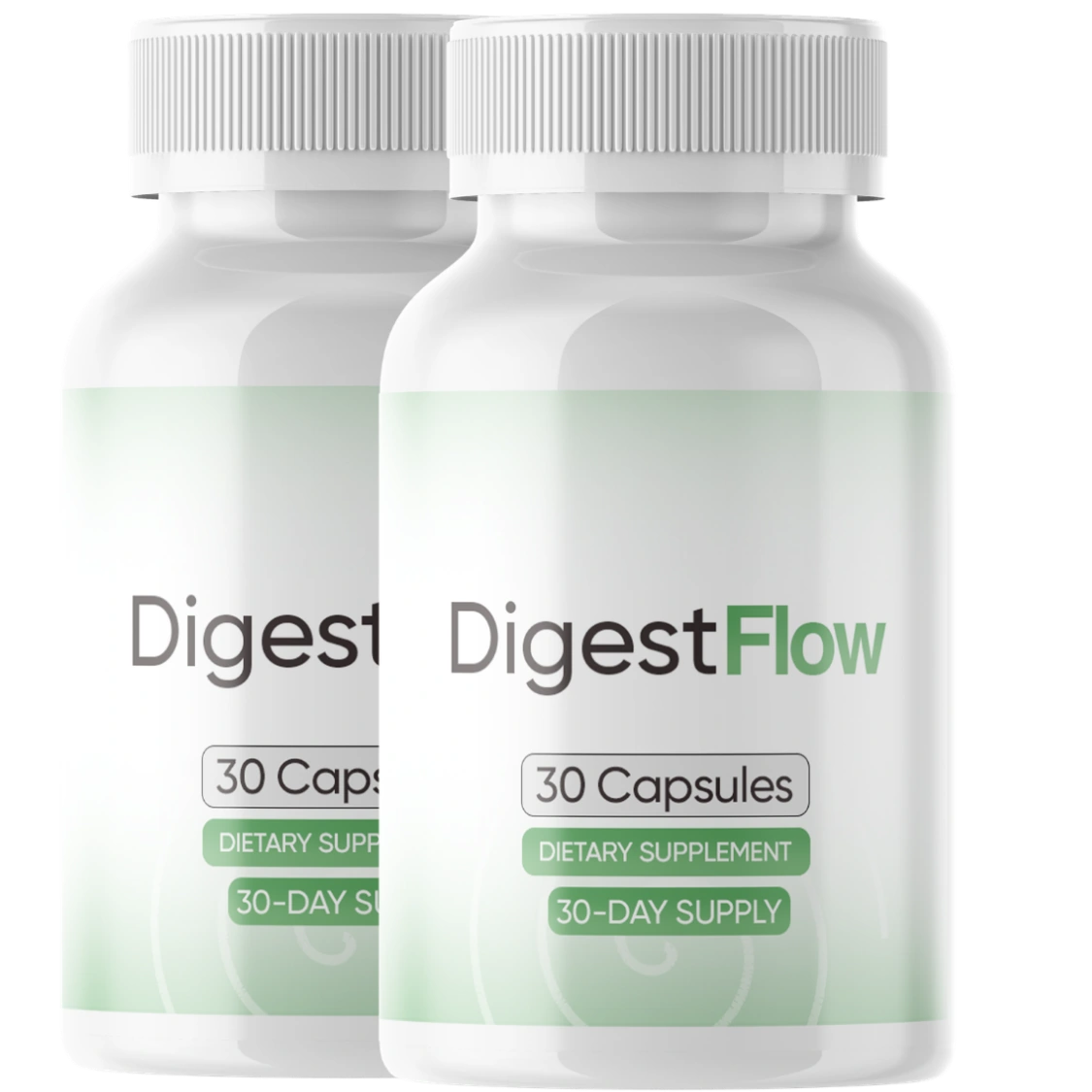
DigestFlow prints every weight, so this arithmetic is possible
Sixty-five milligrams of HCA against a 1,500 mg null trial. A label with a proprietary blend would not let anybody do that sum.
Two bottles $158 · six bottles $294 · 60 days from purchase
Order DigestFlow On The Official WebsiteOne capsule a day · 30 per bottle · lot DIG-26/GO-2148
Why attribution is genuinely hard
Most of the published reports involve multi-ingredient products, which makes assigning cause to any one component difficult in a way that is worth understanding rather than waving away.
- Several ingredients at once. A capsule with six botanicals in it gives six candidates for any effect, and usually no way to separate them.
- Contamination and substitution. A product that did not contain what its label said is a recurring theme in supplement safety literature generally.
- Dose is often unknown. Where the panel carried a proprietary blend, nobody can say how much of anything the patient took.
- Background factors. Alcohol, prescription medicines and existing liver conditions all appear in these reports and all complicate the picture.
- Reporting bias runs both ways. Rare events are under-reported; famous ingredients are over-attributed.
The fair conclusion from all that is not that the reports are meaningless. It is that they establish a question rather than an answer, and that a reader is better served by knowing the question exists than by either a reassurance or an alarm.
What this means at 65 mg
Three things, and they should be held together rather than one at a time.
First, this row sits well below the doses in the published reports, and it sits far below the dose in the null efficacy trial. On both counts the amount here is small.
Second, small is not the same as absent, and the reports describe idiosyncratic reactions rather than dose-dependent ones. An idiosyncratic reaction is by definition not something a dose calculation predicts.
Third, the person who should weigh this most carefully is anyone with existing liver disease, anyone already taking several supplements at once, or anyone who drinks heavily. For that reader the useful fact is simply that the literature exists.
What to ask before taking any garcinia product
Four questions, and they apply to any bottle in any aisle that carries this ingredient rather than only to this one.
- How much HCA, not how much extract? Without a standardisation percentage the weight on the row tells you nothing about the compound the literature is about. This label prints 50 per cent, which is why the arithmetic above was possible.
- What else is in the capsule? Most of the published reports involve multi-ingredient products, so the number of other rows is part of the picture.
- Is anything else I take going through the same organ? Several supplement categories carry a liver signal, and green tea extract is one of them. Totals matter more than any individual row.
- Do I have a reason to be careful? Existing liver disease, heavy drinking, or a prescription that already requires monitoring all change the answer, and all of them are worth a conversation before the first capsule rather than after a symptom.
Those four take a minute with the bottle in your hand and they are more useful than any verdict a page like this one could offer. The point of publishing the case literature is not to frighten somebody off a 65 mg row; it is to make sure the reader who genuinely should be careful has been told.
It is also worth saying what this section is not. It is not a claim that this product has caused harm to anybody, and this desk has received no such report. It is an account of what has been published about an ingredient the panel contains.
What to watch for, and when to stop
This is the practical section and it is short.
- Yellowing of the skin or the whites of the eyes. Stop and get seen.
- Dark urine or pale stools. Stop and get seen.
- Persistent nausea, or pain under the right ribs. Stop and get seen.
- Unusual tiredness that arrives with any of the above. Stop and get seen.
- Anything at all, if you have existing liver disease. Have the conversation before the first capsule rather than after a symptom.
None of those is a reason to avoid the product outright and all of them are reasons not to wait and see. The sixty-day window exists for the milder version of the same judgement, and the order desk processes a return without an argument.
The rest of the safety picture, including green tea extract and the caffeine that dominates this label, is on side effects. Every row of the panel is taken apart on ingredients.
References
- Heymsfield SB, Allison DB, Vasselli JR, et al. Garcinia cambogia (hydroxycitric acid) as a potential antiobesity agent: a randomized controlled trial. JAMA. 1998;280(18):1596-600. PMID 9820262. https://pubmed.ncbi.nlm.nih.gov/9820262/
- Corey R, Werner KT, Singer A, et al. Acute liver failure associated with Garcinia cambogia use. Ann Hepatol. 2016;15(1):123-6. PMID 26626648. https://pubmed.ncbi.nlm.nih.gov/26626648/
- Lunsford KE, Bodzin AS, Reino DC, et al. Dangerous dietary supplements: Garcinia cambogia-associated hepatic failure requiring transplantation. World J Gastroenterol. 2016;22(45):10071-10076. PMID 28018115. https://pubmed.ncbi.nlm.nih.gov/28018115/
- Yousaf MN, Chaudhary FS, Hodanazari SM, Sittambalam CD. Hepatotoxicity associated with Garcinia cambogia: A case report. World J Hepatol. 2019;11(11):735-742. PMID 31772720. https://pubmed.ncbi.nlm.nih.gov/31772720/
- LiverTox: Clinical and Research Information on Drug-Induced Liver Injury. Garcinia Cambogia. Bethesda (MD): National Institute of Diabetes and Digestive and Kidney Diseases. https://www.ncbi.nlm.nih.gov/books/NBK548087/
- National Institutes of Health, Office of Dietary Supplements. Dietary Supplements for Weight Loss: Health Professional Fact Sheet. https://ods.od.nih.gov/factsheets/WeightLoss-HealthProfessional/