DigestFlow Official Website › Blog › Do Digestive Enzyme Supplements Work
Do Digestive Enzyme Supplements Work? 5 Checks Of The Label
Digestive enzyme supplements are a common search: do they work, what are the benefits, are they safe, when should you take them? This page cannot give medical advice. It gives five label checks that fit any bottle, with the evidence stated as plainly as the site’s own sources allow.
Quick answer: Digestive enzymes act on the meal in the gut, not on the body, so they are designed to be taken with food. The clearest case is lactase for lactose. Broad-spectrum blends for general discomfort are a much weaker proposition. DigestFlow is not an enzyme product. Ask a clinician about persistent symptoms.
- Enzymes act on the meal in the gut, not on the body, so they are taken with food.
- Typical enzymes are protease, lipase, amylase and lactase.
- Clearest case: lactase for lactose, which has a known deficiency, a known substrate and a known fix.
- Weak case: broad-spectrum blends for general discomfort, which are sold far more widely.
- An enzyme product does little between meals.
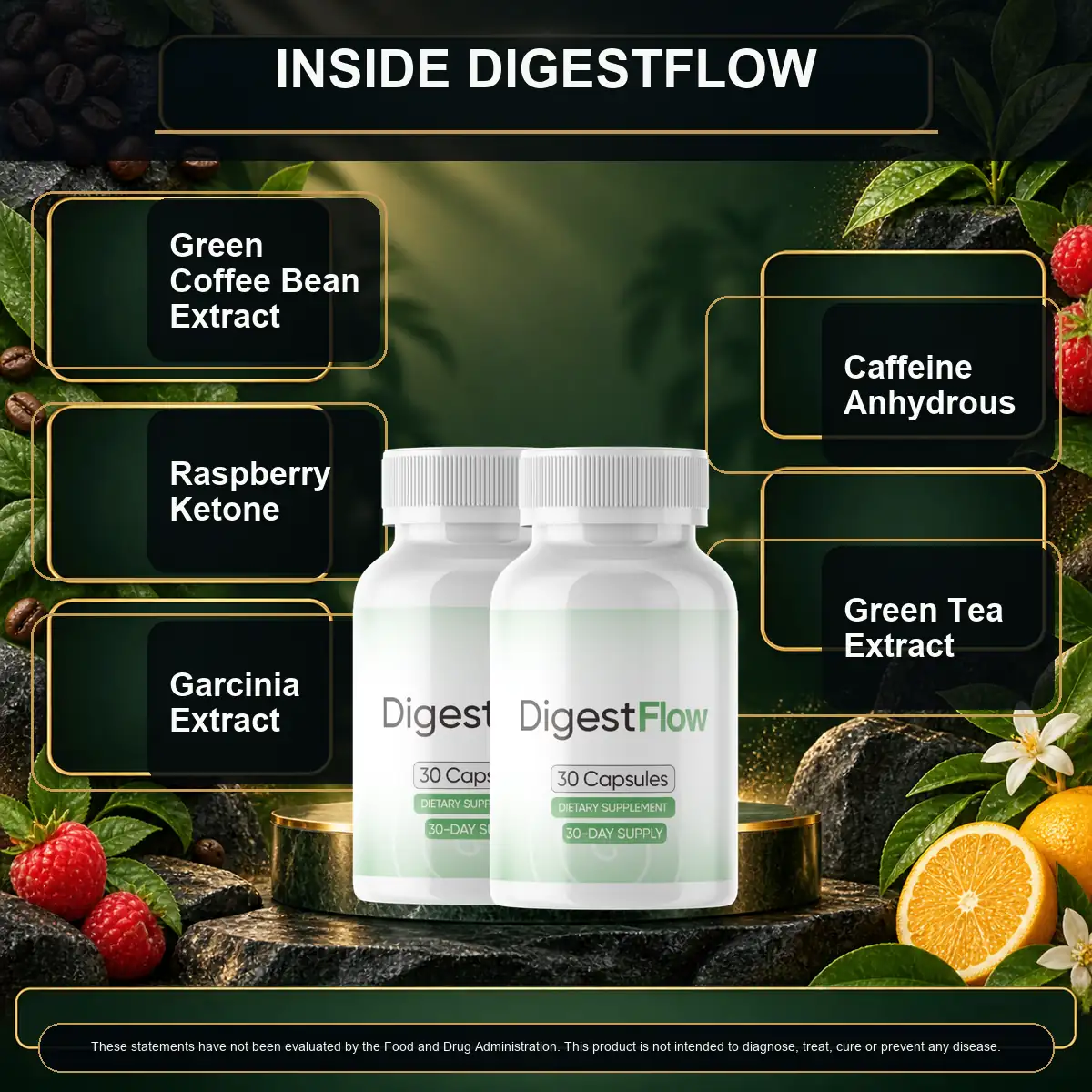
- DigestFlow contains no digestive enzyme, no probiotic and no fibre.
Check 1: What are digestive enzymes supposed to do?
Labels in this group usually name protease, lipase, amylase or lactase. A digestive enzyme supplement is meant to add some work to the meal you eat with it.
That is why the category guide on this site says enzymes act on the meal in the gut rather than on the body. It also says what they are poor at, which is doing anything at all between meals. A capsule taken on its own, with nothing to digest, has little to work on.
The NIDDK explainer on how digestion works is a good background read. A mechanism only makes sense against the process it is meant to affect.
Check 2: Where is the evidence strongest and where is it weakest?
Narrow and well defined is how the evidence looks at its best. Lactase for lactose is the clearest case in the whole category. There is a known deficiency, a known substrate and a known fix.
Broad-spectrum enzyme blends for general discomfort are a much weaker proposition, and they are sold far more widely. A blend that lists many enzymes under one total also fails the first label test, because you cannot see any single amount.
This site publishes no trial figures for enzyme products, and we will not invent any. If an advert quotes percentages, ask which study, which enzyme and which condition.
| Type of enzyme product | How the guide rates the case |
|---|---|
| Lactase for lactose | The clearest case in the category |
| Single named enzyme for a named substrate | Narrow and well defined |
| Broad-spectrum blend for general discomfort | A much weaker proposition, sold far more widely |
From the site's category guide to digestive supplements.
Check 3: When should you take digestive enzyme supplements?
With food. That is the typical form in the guide: protease, lipase, amylase and lactase, with food. The reason is simple. The enzyme acts on the meal, so it needs a meal to act on.
Beyond that, follow the bottle. This site has no timing rules or doses for enzyme products, and the right amount depends on the product. Do not copy a routine from one brand to another, and do not assume more is better.
Keep notes, as for any new supplement. One change at a time makes the result readable. Two new products in one week do not.
Check 4: How do you read an enzyme label in four minutes?
These steps work for any digestive bottle, and are the ones this site uses on its own product.
- Find the serving size first. A two-capsule serving on a 60-capsule bottle is a month, not two.
- Look for a proprietary blend. One weight covering many names means you cannot know any of them.
- Read the standardisation, not only the weight. A 500 mg extract at 5 per cent is 25 mg of the compound the research is about.
- Check for caffeine in any disguise. It can sit inside green tea or guarana rows, or in a Contains Caffeine line.
- Read the other-ingredients line, which names the shell and answers the vegetarian question.
- Then look up one ingredient, the largest row, for the outcome on the front of the bottle.
A last habit pays for itself. Multiply the row weight by the standardisation percentage before comparing anything with a study.
Not an enzyme, and the label says so
The official page shows DigestFlow's printed panel, the three packs and the 60-day guarantee.
See today's price and guaranteeDisclosure: this website is a retailer and earns on the packs it sells. The checkout shows the amount you pay.
Check 5: Are enzyme supplements safe, and who should see a doctor first?
This site publishes no safety figures or side-effect rates for enzyme products. If you take medication or have a medical condition, ask a clinician before you start. If you notice anything new, strong or lasting, stop and ask.
No supplement can tell you why a symptom is there. Several different conditions cause similar complaints, and the NIDDK page on irritable bowel syndrome shows how much overlap there is between things that need very different answers. Bleeding, unexplained weight change, persistent pain, fever, difficulty swallowing or a change lasting more than a few weeks all call for an examination.
The NCCIH page on dietary and herbal supplements is a fair general primer on weighing any claim.
Where does DigestFlow sit next to an enzyme product?
It is a different kind of bottle. The panel lists five actives, 658 mg per capsule, and none is an enzyme. Among its five rows, only caffeine anhydrous, 138 mg, has a measured effect on the intestine, and it acts on motility rather than on a meal.
That has practical consequences. DigestFlow is a once-a-day capsule with a morning timing rule driven by caffeine, not a with-food product designed around a meal. The label asks for one capsule daily and not to exceed the recommended dose. It is not for individuals under 18 or for pregnant or nursing mothers.
Frequently asked questions
Do digestive enzyme supplements work?
The clearest case is lactase for lactose, a known deficiency with a known fix. Broad-spectrum blends for general discomfort are a much weaker proposition. This site publishes no trial figures for them.
When should I take digestive enzyme supplements?
With food, because enzymes act on the meal and do little between meals. Beyond that, follow the bottle. This site has no doses or timing rules for enzyme products.
Are digestive enzyme supplements safe?
This site publishes no safety figures for them. Ask a clinician first if you take medication or have a medical condition, and stop if something new or lasting appears.
What are the benefits of digestive enzymes?
They are meant to add some breaking-down work to a meal. The benefit is clearest where a single enzyme matches a known problem, such as lactase and lactose.
Is DigestFlow a digestive enzyme?
No. Its panel has five actives and none is an enzyme. Only the caffeine row has a measured effect on the intestine.
What should I check on an enzyme label?
The serving size, any proprietary blend, the standardisation, hidden caffeine and the other-ingredients line. Then look up the largest row for the outcome on the front.
Sources
- National Institute of Diabetes and Digestive and Kidney Diseases. Your Digestive System and How It Works: https://www.niddk.nih.gov/health-information/digestive-diseases/digestive-system-how-it-works
- National Institute of Diabetes and Digestive and Kidney Diseases. Irritable Bowel Syndrome (IBS): https://www.niddk.nih.gov/health-information/digestive-diseases/irritable-bowel-syndrome
- National Center for Complementary and Integrative Health. Dietary and Herbal Supplements: https://www.nccih.nih.gov/health/dietary-and-herbal-supplements
- National Center for Complementary and Integrative Health. Probiotics: What You Need To Know: https://www.nccih.nih.gov/health/probiotics-what-you-need-to-know
- The DigestFlow label as reproduced on this site
Our view
Digestive enzymes are a sensible idea when one enzyme meets one clear problem, and a much shakier one when a blend is sold for general discomfort. A short label check will tell you which kind of bottle you are holding.
We would keep enzymes, probiotics, fibres and stimulants apart in your head, and match the group to what you actually want. This page is general information, not medical advice. If symptoms are persistent or worrying, see a doctor before you buy anything.
Match the bottle to the aim
If a once-a-day capsule with 138 mg of caffeine suits what you want, the official page shows today's price and the guarantee.
See today's price and guaranteeDisclosure: this website is a retailer and earns on the packs it sells. The checkout shows the amount you pay.
Last updated . Medically reviewed by Dr. Will Bulsiewicz, MD, Physician.